Selected Work in Progress
(as of Oct 2026; project descriptions are intentionally brief to allow for twists and turns)
Moving Opportunities? South Korea's Elite High School Relocation (1974–1987)
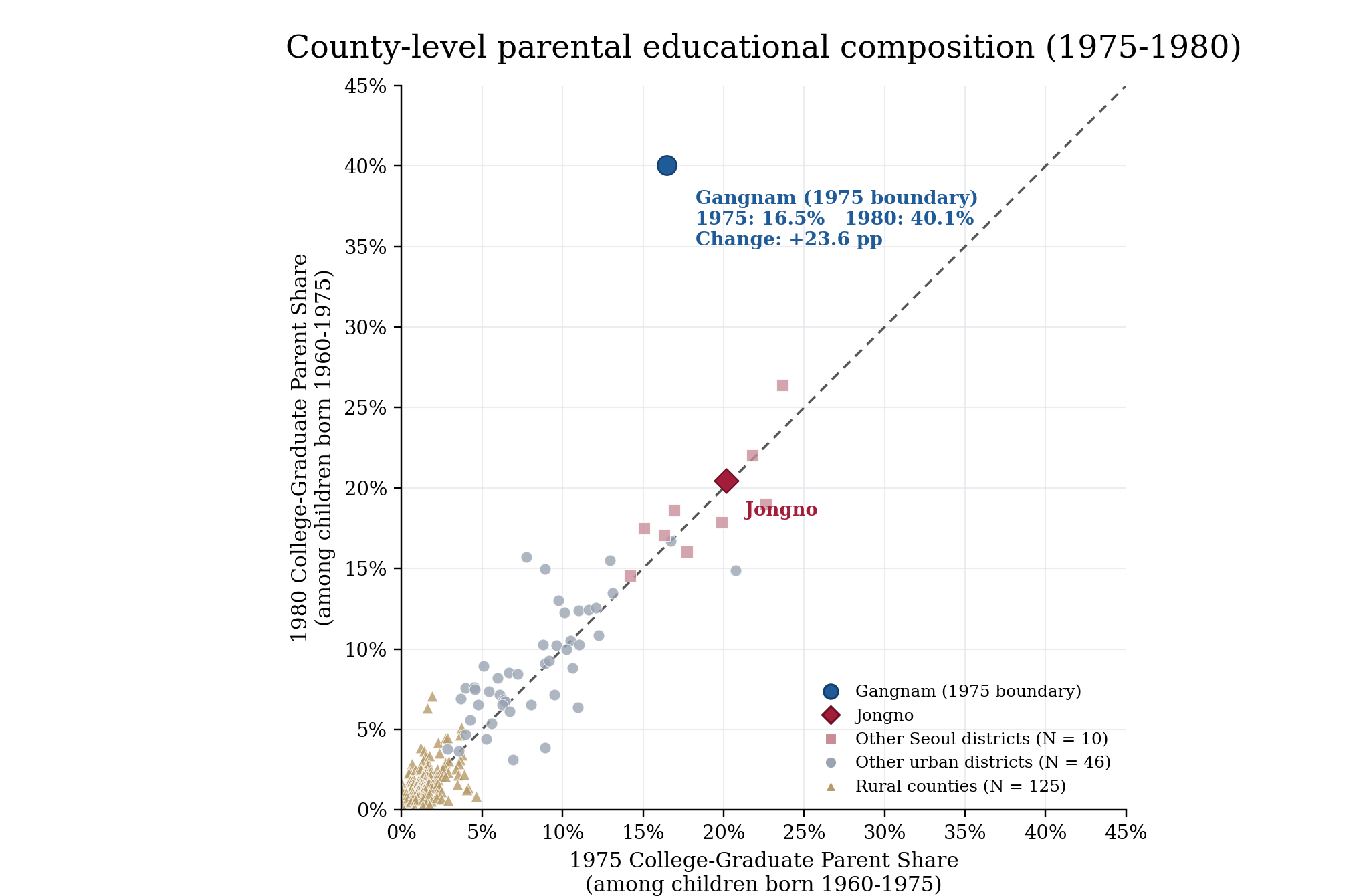
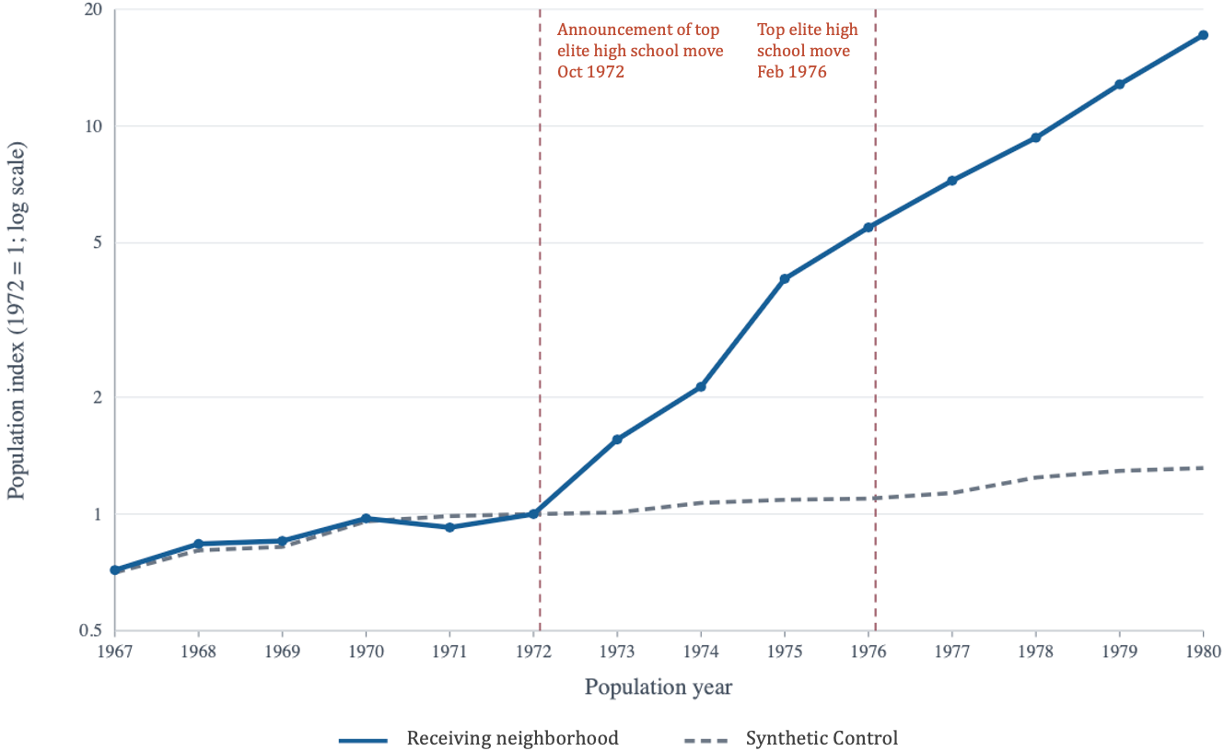
I explore how access to elite schools shapes segregation and upward mobility when top positions in society disproportionately come from this small set of institutions. I study the forced relocation of elite high schools in South Korea from Seoul's urban core to then-rural suburbs during authoritarian regimes. I first document descriptive evidence that these schools were widely viewed as pathways to success, and then estimate the effects of gaining and losing access on the upward mobility of native residents.
Intergenerational Transmission of Elite Status in Meritocracy: Joseon Korea (14-19C)
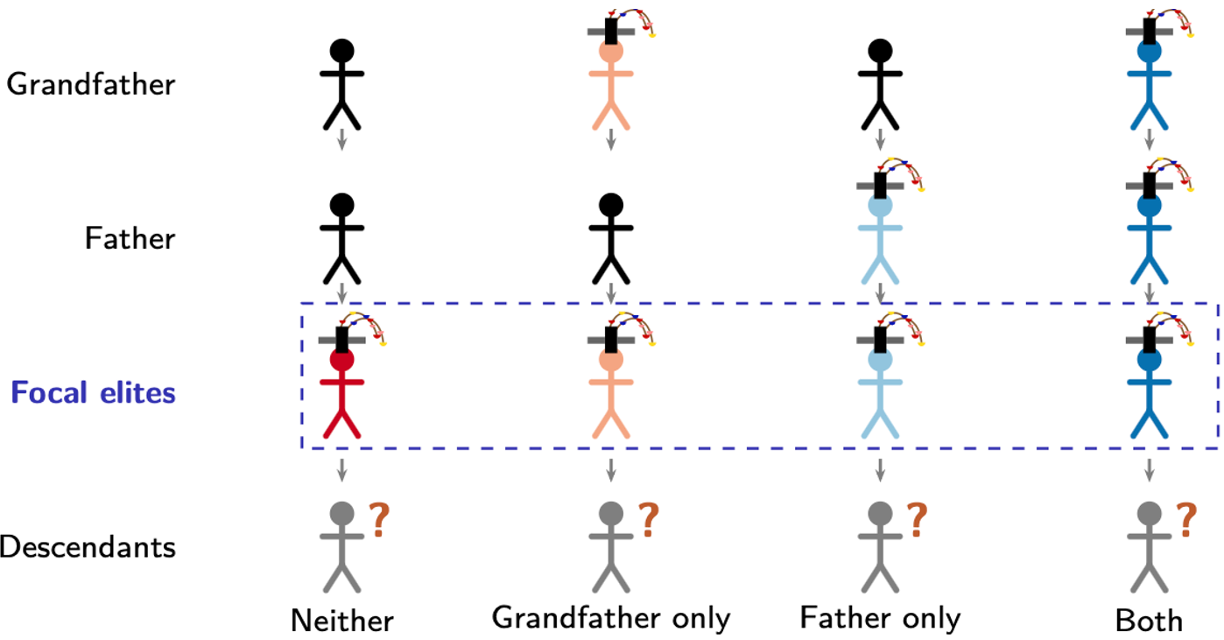
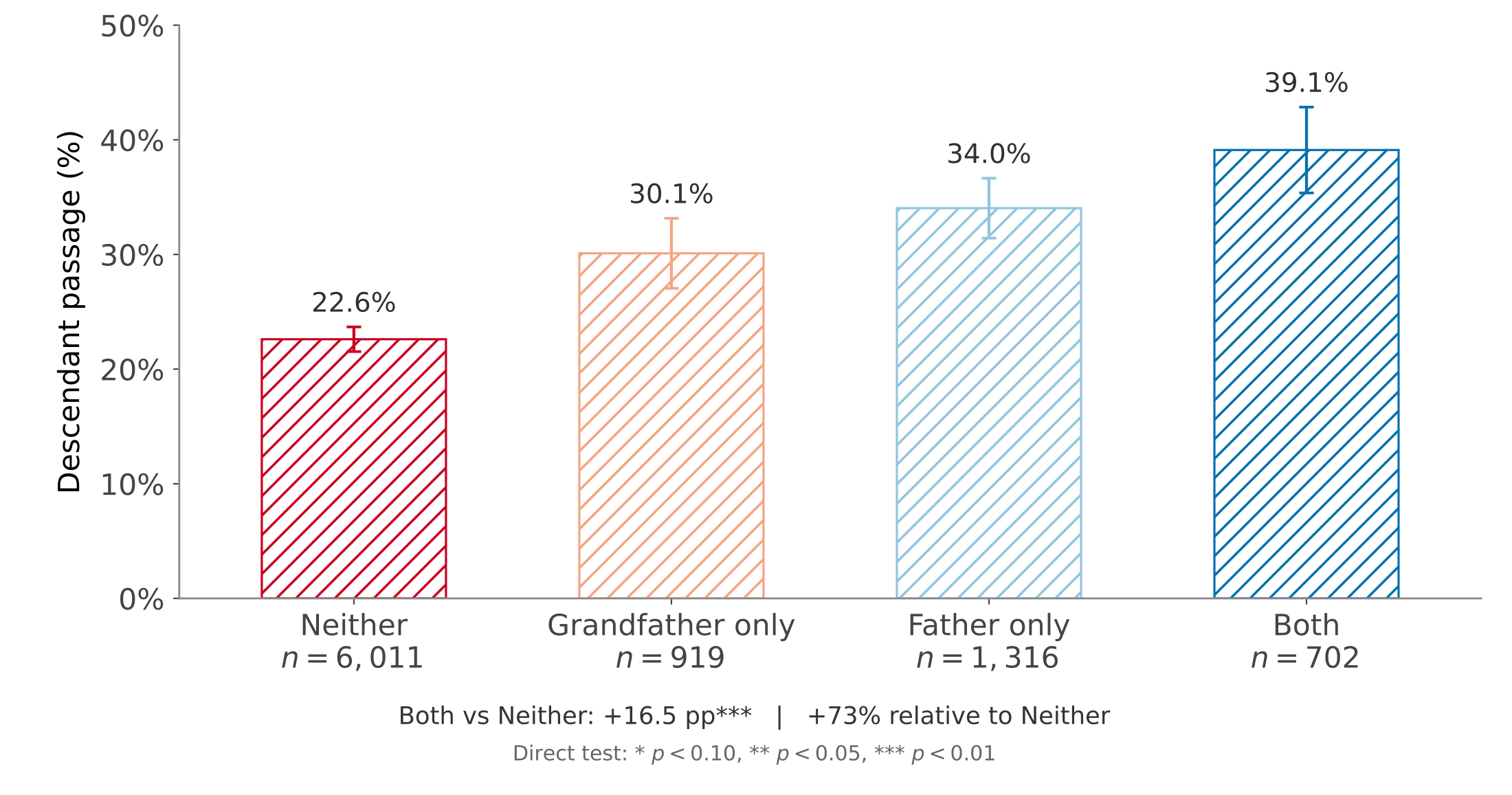
We explore how class shapes the intergenerational transmission of elite status under meritocracy. We study Joseon Korea, where elite statuses were predominantly earned through a merit-based civil service examination for nearly five centuries. By tracing both the ancestors and descendants of elite bureaucrats, we document substantial class gaps in elite transmission, even among individuals who attained the same elite status through the same exam. We then investigate the mechanisms underlying these disparities, including networks, cultural capital, and other forms of advantages.